
The demographic reality of the Canadian construction industry is shifting rapidly. With a significant portion of the skilled trades population approaching retirement age, employers are facing a dual challenge. They must manage a severe labour shortage while simultaneously ensuring the health and safety of an aging workforce. The physical demands of construction work take a cumulative toll on the human body, and as workers age, their physiological capacities change. This reality requires a proactive approach to safety management, one that goes beyond basic compliance and actively adapts the work environment to the worker.
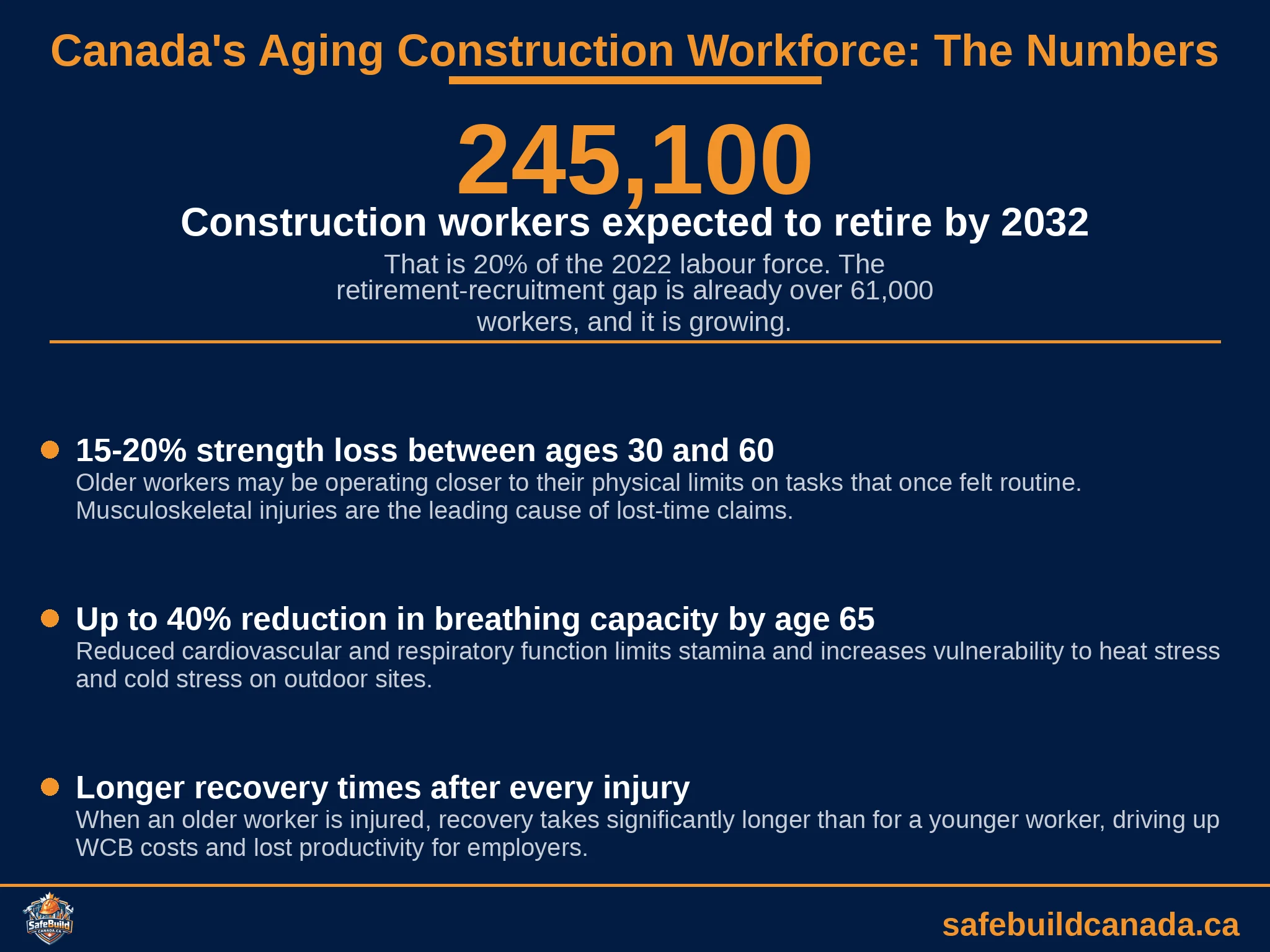
According to BuildForce Canada, approximately 245,100 construction workers are expected to retire by 2032. This represents roughly 20 percent of the 2022 labour force. While the industry scrambles to recruit new talent, retaining experienced older workers is critical for maintaining productivity and transferring essential knowledge. However, keeping these veteran tradespeople on the tools requires a deep understanding of the specific safety risks they face and the legal obligations employers have to protect them.
This guide explores the safety implications of the aging construction workforce in Canada. We will examine the physiological changes that increase injury risk, the specific hazards older workers face on site, and the practical steps employers must take to create a safer, more sustainable work environment for their most experienced personnel.
The physiological realities of aging in construction
Construction is inherently physical work. It requires strength, stamina, balance, and sharp reflexes. As workers age, natural physiological changes occur that can impact their ability to perform these tasks safely. Understanding these changes is the first step in mitigating the associated risks.
Musculoskeletal decline and cumulative trauma
The musculoskeletal system weakens over time. The Canadian Centre for Occupational Health and Safety (CCOHS) notes that, in general, people lose approximately 15 to 20 percent of their strength between the ages of 30 and 60. While many construction tasks do not require maximum strength, older workers may find themselves operating closer to their physical limits than their younger counterparts.
Decades of repetitive motion, heavy lifting, and awkward postures take a cumulative toll. Joints lose flexibility, and the risk of developing musculoskeletal disorders (MSDs) such as osteoarthritis, tendinitis, and chronic back pain increases significantly. These conditions not only cause pain and reduce mobility but also make older workers more susceptible to acute injuries from sudden strains or overexertion.
Cardiovascular and respiratory changes
The ability of the heart, lungs, and circulatory system to deliver oxygen to the muscles decreases with age. CCOHS reports that between the ages of 30 and 65, functional breathing capacity can reduce by up to 40 percent. This decline affects a worker's stamina and their ability to sustain heavy physical labour over long periods. It also reduces the body's capacity to regulate internal temperature, making older workers more vulnerable to heat stress during the summer months and cold stress in the winter.
Sensory and cognitive shifts
Vision and hearing naturally decline as we age. Older workers may experience reduced visual acuity, poorer depth perception, and increased sensitivity to glare. These changes can make it difficult to read small print on safety labels, navigate poorly lit areas, or judge distances accurately when operating machinery.
Hearing loss is particularly prevalent in construction due to cumulative exposure to high noise levels. Older workers may struggle to hear verbal instructions or warning signals in noisy environments, increasing the risk of accidents.
Cognitively, while experience and judgment often improve with age, fluid intelligence (the ability to process new information quickly) may decline. Older workers might find it more challenging to adapt to complex new technologies or rapidly changing work environments. They may also require more time to recover from fatigue, especially when working irregular shifts or long hours.
Key safety risks for older construction workers
The physiological changes associated with aging translate directly into specific safety risks on the construction site. While older workers generally have fewer accidents than younger, less experienced workers, the injuries they do sustain tend to be more severe and require longer recovery times.
Slips, trips, and falls
Falls remain one of the leading causes of injury and death in the Canadian construction industry. For older workers, the risk is amplified by changes in balance, slower reaction times, and reduced joint flexibility. A minor trip that a younger worker might easily recover from can result in a serious fall for an older worker. The consequences of a fall are also more severe for older individuals, leading to fractures or head injuries that can be career ending.
Ergonomic injuries and overexertion
As mentioned earlier, the cumulative effect of physical labour makes older workers highly susceptible to ergonomic injuries. Lifting heavy materials, working in awkward postures (such as kneeling or working overhead), and using vibrating tools can exacerbate existing joint pain and lead to severe strains and sprains. Employers must recognize that tasks previously performed with ease may now pose a significant risk of overexertion.
Heat and cold stress
The reduced ability to regulate body temperature makes older workers particularly vulnerable to extreme weather conditions. During the summer, they are at a higher risk of heat exhaustion and heat stroke. In the winter, they are more susceptible to cold stress and frostbite. Employers must monitor weather conditions closely and implement appropriate controls, such as frequent rest breaks, hydration stations, and modified work schedules, to protect their aging workforce.
Delayed recovery and chronic pain
When an older worker is injured, their recovery time is typically much longer than that of a younger worker. A sprained ankle or a pulled back muscle can take weeks or even months to heal fully. This delayed recovery not only impacts the worker's quality of life but also results in higher workers' compensation costs and longer periods of lost productivity for the employer. Additionally, older workers are more likely to suffer from chronic pain, which can affect their concentration and overall safety performance on site.
Employer obligations under Canadian OHS law
In Canada, occupational health and safety is regulated primarily at the provincial and territorial level, with federal regulations applying to specific industries. Across all jurisdictions, employers have a fundamental legal duty to ensure the health and safety of their workers. This duty extends to accommodating the specific needs of an aging workforce.
The general duty clause
Every provincial OHS act contains a "general duty clause" that requires employers to take all reasonable precautions to protect workers. For example, the Ontario Occupational Health and Safety Act (OHSA) states that an employer must "take every precaution reasonable in the circumstances for the protection of a worker."
In the context of an aging workforce, this means employers cannot simply apply a one size fits all approach to safety. They must proactively identify the hazards that disproportionately affect older workers and implement specific controls to mitigate those risks. Failing to do so could result in severe penalties, including fines and prosecution, in the event of an injury or fatality.
Human rights and the duty to accommodate
Beyond OHS legislation, employers must also comply with provincial and federal human rights codes, which prohibit discrimination based on age and physical disability. These codes establish a "duty to accommodate" workers with physical limitations, up to the point of undue hardship for the employer.
If an older worker develops a physical limitation (such as chronic back pain or reduced hearing) that affects their ability to perform their job safely, the employer must explore reasonable accommodations. This could involve modifying their duties, providing assistive equipment, or adjusting their work schedule. Dismissing an older worker simply because they can no longer perform heavy physical labour without exploring accommodation options could lead to a costly human rights complaint.
For a broader perspective on how the industry is evolving, you can review our construction industry insights Canada cornerstone page.
Practical strategies for protecting older workers
Protecting an aging workforce requires a proactive, multifaceted approach. Employers must move beyond basic compliance and actively design work environments that support the physical and cognitive needs of older tradespeople.
Implement comprehensive ergonomic programs
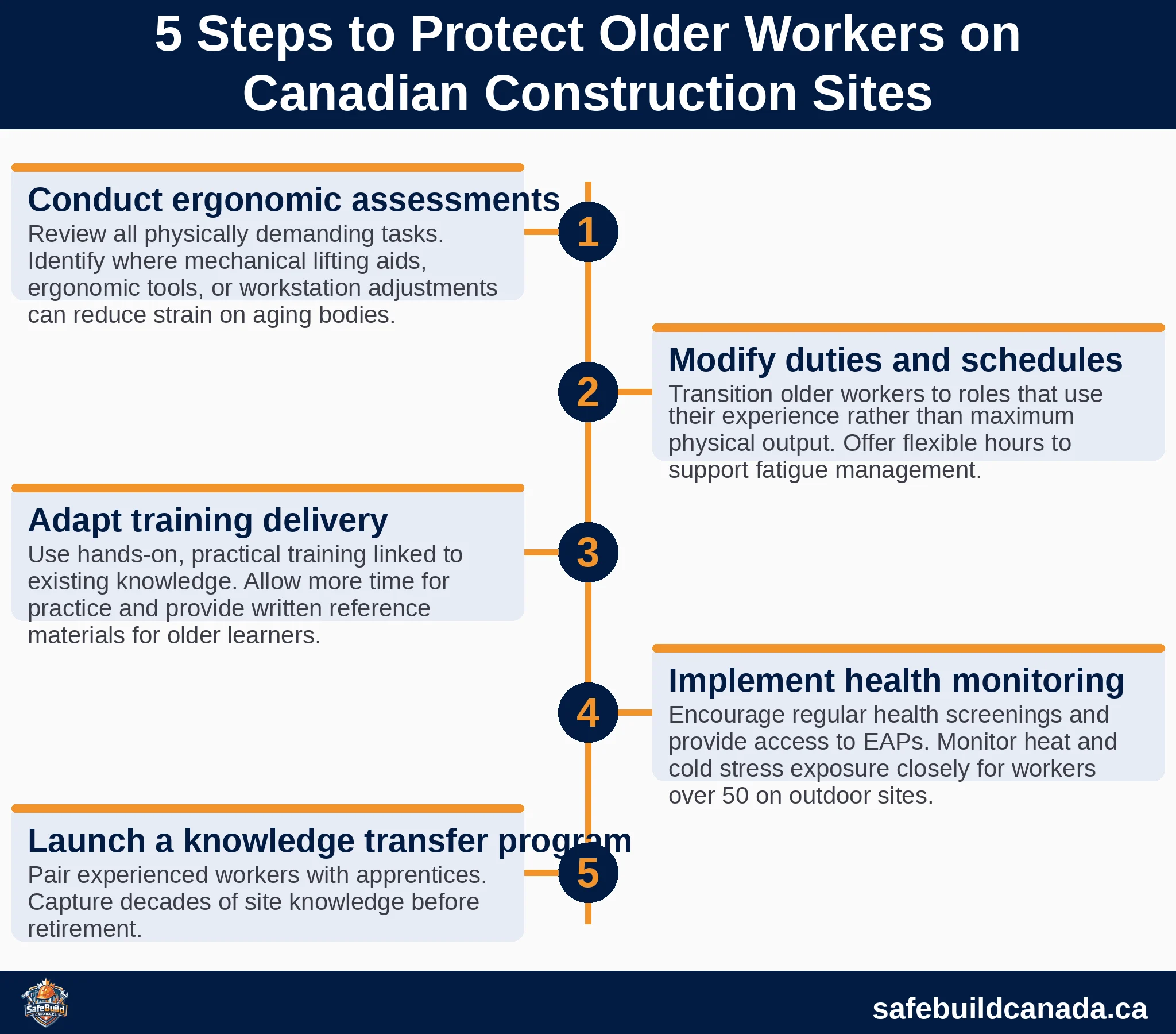
Ergonomics is the science of fitting the job to the worker. For an aging workforce, a structured ergonomic program is essential. Employers should conduct regular ergonomic assessments of all tasks, focusing on those that require heavy lifting, repetitive motion, or awkward postures.
Practical ergonomic interventions include:
Providing mechanical lifting aids (such as hoists, cranes, or vacuum lifters) to reduce manual material handling.
Supplying tools with vibration dampening features and ergonomic grips to reduce strain on the hands and arms.
Adjusting workstation heights to minimize bending and reaching.
Encouraging the use of knee pads and anti fatigue mats.
Modify work assignments and schedules
As workers age, their capacity for sustained heavy labour decreases. Employers should consider modifying work assignments to match the physical capabilities of their older employees. This might involve transitioning them from highly physically demanding roles to tasks that require more skill, precision, or supervision.
Flexible scheduling can also be highly beneficial. Offering part time hours, job sharing arrangements, or flexible start times can help older workers manage fatigue and maintain a better work life balance. Additionally, employers should be mindful of the impact of shift work on older employees, as their ability to adapt to irregular sleep patterns often declines with age.
Enhance training and knowledge transfer
Older workers possess a wealth of experience and institutional knowledge that is invaluable to the company. Employers should use this expertise by transitioning older workers into mentoring or training roles. This not only reduces their physical strain but also ensures that critical skills are passed down to the next generation of tradespeople.
When providing new training to older workers (such as introducing new safety software or equipment), employers should be mindful of different learning styles. Training should be practical, hands on, and clearly linked to their existing knowledge base. Providing ample time for practice and offering written reference materials can also improve knowledge retention.
Understanding the broader context of the construction labour shortage can help employers appreciate the critical importance of retaining these experienced workers.
Prioritize health and wellness initiatives
Promoting overall health and wellness is a key component of managing an aging workforce. Employers should encourage regular health screenings and provide access to resources that support physical and mental well-being.
This could include offering wellness programs that focus on fitness, nutrition, and stress management. Providing access to Employee Assistance Programs (EAPs) can also help older workers navigate the emotional and psychological challenges associated with aging and transitioning towards retirement.
It is also crucial to recognize the impact of mental health in Canadian construction, as older workers may face unique stressors related to job security, physical decline, and financial planning.
The role of safety culture and communication
Ultimately, protecting an aging workforce requires a strong safety culture built on open communication and mutual respect. Older workers must feel comfortable reporting physical limitations, pain, or safety concerns without fear of reprisal or age discrimination.
Employers should foster an environment where workers are encouraged to speak up about ergonomic issues and suggest improvements to work processes. Regular safety meetings and toolbox talks should specifically address the risks associated with aging and highlight the importance of proper lifting techniques, hydration, and fatigue management.
By actively engaging older workers in the safety process, employers can tap into their extensive experience to identify hazards and develop practical solutions that benefit the entire workforce.
For a closer look at the numbers behind workplace incidents, review our analysis of construction fatality statistics in Canada.
Conclusion
The aging of the Canadian construction workforce is an undeniable reality. As experienced tradespeople approach retirement, employers face the critical challenge of keeping them safe on the job while managing the physical realities of aging. By understanding the physiological changes that increase injury risk and implementing proactive strategies such as ergonomic interventions, modified duties, and structured health and wellness programs, employers can protect their most valuable asset: their people.
Investing in the safety of older workers is not just a legal obligation; it is a strategic necessity. Retaining experienced personnel is essential for maintaining productivity, ensuring quality, and transferring critical knowledge to the next generation. By creating a work environment that adapts to the needs of an aging workforce, Canadian construction companies can build a safer, more sustainable, and more resilient industry for the future.
Sources
Short-term Contractions May Ease Some Labour Market Challenges, But Canada's Construction Industry Is Poised For Further Growth Through 2032, BuildForce Canada, 2023
Aging Workers, Canadian Centre for Occupational Health and Safety, 2026
Facts and figures, WorkSafeBC, 2024
The Daily: Canadian Survey on Working Conditions, 2024-2025, Statistics Canada, 2026