
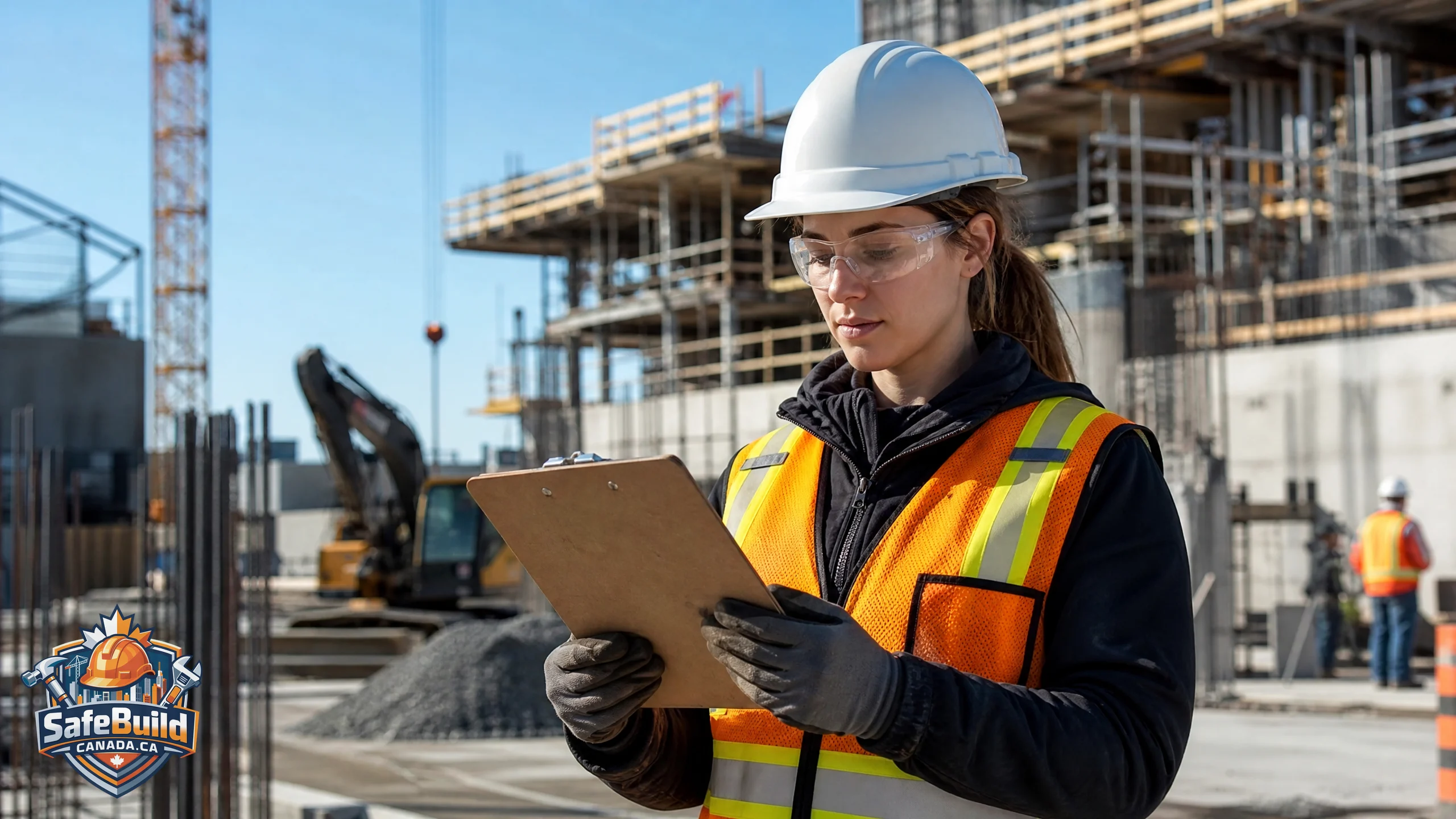
The Canadian construction industry is changing. In 2025, women represented nearly 14 percent of the national construction workforce, the highest share ever recorded. While this growth is positive for an industry facing a severe labour shortage, it exposes significant gaps in how safety is managed on site. The safety challenges women in Canadian construction face are not just about culture; they are about physical protection, regulatory compliance, and fundamental employer obligations.
When safety programs, personal protective equipment, and site facilities are designed exclusively for a male workforce, female workers are placed at a higher risk of injury. Employers who fail to address these gaps are not only compromising worker safety but also risking non-compliance with provincial occupational health and safety legislation.
This guide breaks down the specific safety challenges female construction workers face in Canada, what the law requires employers to do, and how site supervisors can implement practical solutions to protect every worker on their site.
The reality of the PPE fit gap for women
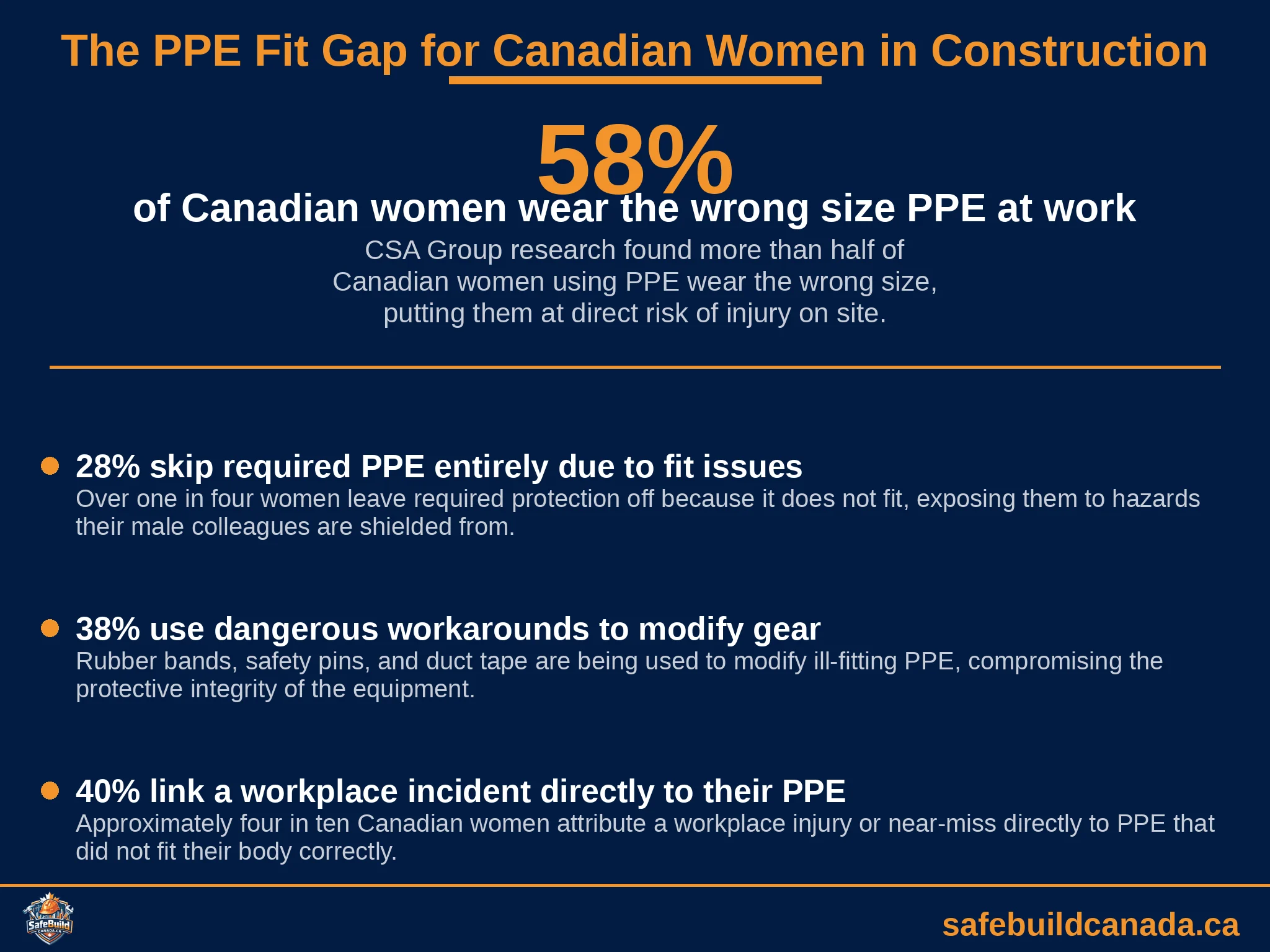
Personal protective equipment is the last line of defense against workplace hazards. For it to work, it must fit properly. However, a comprehensive 2022 study by the CSA Group revealed that 58 percent of Canadian women who use PPE at work reported wearing the wrong size.
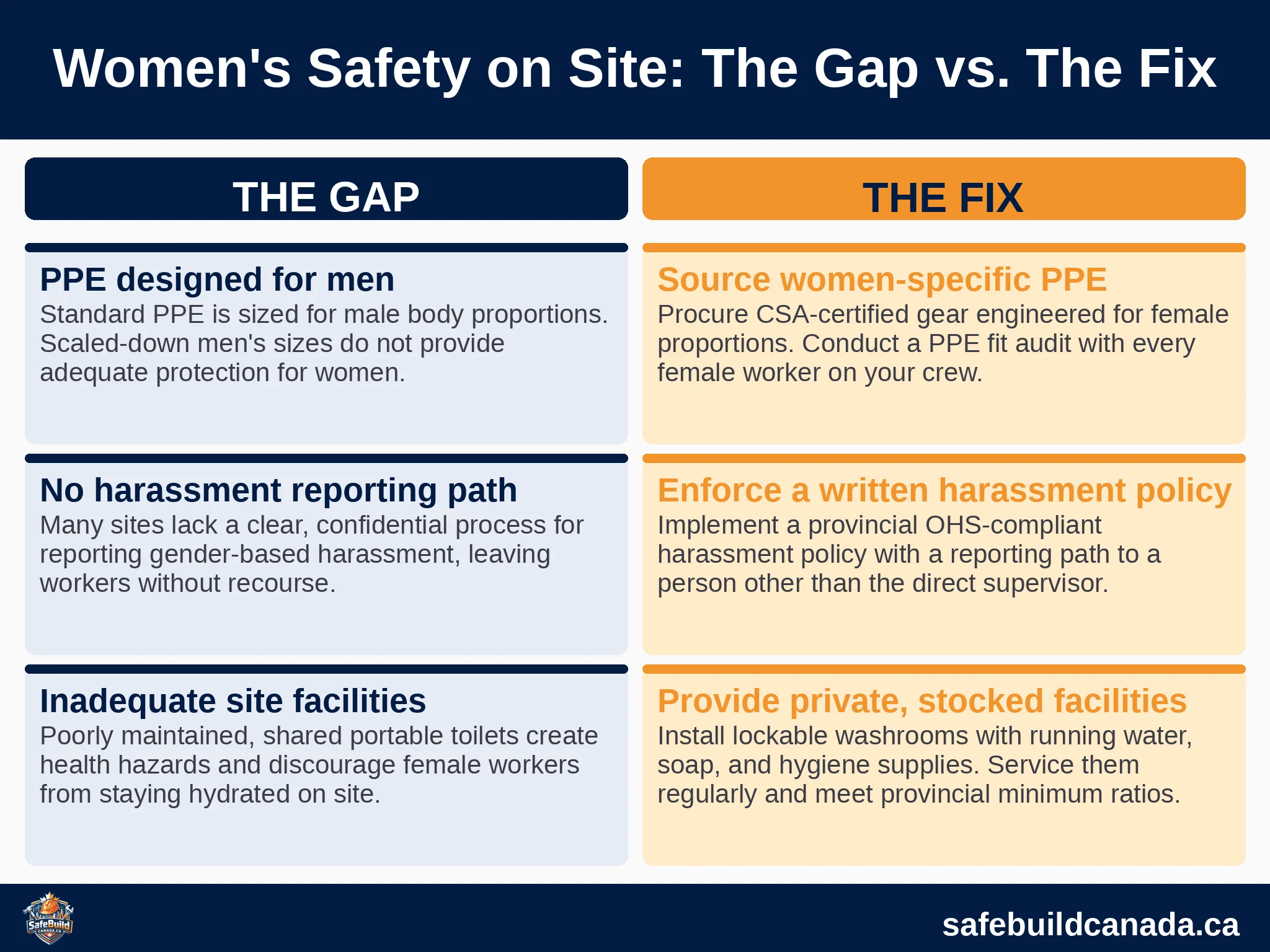
Women have different body proportions than men. They typically have narrower faces, smaller hands, and different waist-to-hip ratios. Simply providing a "small" men's size does not solve the problem. A scaled-down men's fall arrest system will not distribute force correctly on a female body during a fall. A men's respirator that is too large will not seal properly against a woman's face, allowing hazardous airborne particulates to enter her lungs.
The consequences of ill-fitting PPE are severe. The CSA Group research found that 28 percent of women reported not wearing all required PPE because of fit issues, and 38 percent resorted to dangerous workarounds like using rubber bands, safety pins, or duct tape to modify their gear. Most alarmingly, approximately 40 percent of women reported experiencing injuries or incidents they attributed directly to their PPE.
Regulatory requirements for PPE fit
Canadian occupational health and safety legislation requires employers to provide appropriate protection for all workers. While the specific wording varies by province, the core obligation remains the same.
In British Columbia, the WorkSafeBC OHS Regulation Section 8.3 explicitly addresses proper fit, noting that standard male PPE proportions may not provide adequate protection for women. In Alberta, the OHS Act requires employers to ensure that PPE is appropriate for both the hazard and the worker using it. Under the Canada Labour Code Part II, federally regulated employers have a strict duty to provide appropriate safety materials, equipment, devices, and clothing.
If an employer provides PPE that does not fit a female worker properly, they are failing to meet their legal obligation to protect that worker.
Field execution: solving the PPE fit issue
Site supervisors and safety managers must take immediate action to address the PPE fit gap. The first step is to conduct a comprehensive PPE fit audit. Do not assume that the gear in the site trailer fits everyone. Ask female workers directly if their hard hats, safety glasses, gloves, high-visibility clothing, and fall protection systems fit correctly and comfortably.
When procuring new gear, source equipment specifically designed for female proportions. Many manufacturers now produce CSA-certified PPE engineered for women. Ensure that your procurement policies require suppliers to offer a full range of gender-inclusive sizes. If a worker requires specialized gear that is not available through your standard supplier, you must find an alternative source. You can learn more about the specific requirements for safety gear in our guide to CSA PPE standards for Canadian construction.
Workplace harassment as a safety hazard
Workplace harassment is a recognized occupational health and safety hazard in Canada. For women in construction, gender-based harassment remains a persistent issue that directly impacts their physical safety and mental well-being.
Harassment on a construction site can take many forms, from inappropriate comments and exclusion from communication loops to the deliberate sabotage of work or equipment. When a worker is distracted, stressed, or fearful due to harassment, their situational awareness drops. In a high-hazard environment like a construction site, a momentary lapse in focus can lead to a catastrophic incident.
Harassment also contributes significantly to the broader issue of mental health in Canadian construction, increasing the risk of burnout, substance abuse, and long-term psychological harm.
Employer obligations regarding harassment
Every province and territory in Canada requires employers to have policies and procedures in place to prevent and address workplace harassment.
In Ontario, the Occupational Health and Safety Act requires employers to prepare a written policy with respect to workplace harassment, develop a program to implement that policy, and provide workers with appropriate information and instruction. The program must include measures for workers to report incidents of workplace harassment to a person other than the employer or supervisor, if the employer or supervisor is the alleged harasser.
In British Columbia, employers must develop and implement a policy statement with respect to workplace bullying and harassment, and take steps to prevent or minimize it.
Field execution: enforcing a zero-tolerance culture
Having a written policy in a binder in the site office is not enough. Site supervisors must actively enforce a zero-tolerance culture for harassment.
This starts with mandatory construction site training in Canada. Ensure that every worker, subcontractor, and visitor receives clear instruction on the site's harassment policy during their initial safety orientation. Review the requirements for mandatory construction site training in Canada to confirm your orientation program meets provincial standards. Make it explicitly clear what constitutes harassment and what the consequences will be for violating the policy.
Supervisors must lead by example. If a supervisor ignores inappropriate comments or dismisses complaints as "just site banter," they are endorsing a toxic culture. When a complaint is made, it must be investigated promptly, objectively, and confidentially, following the procedures outlined in your company's OHS program.
Sanitation and site facilities
A frequently overlooked safety challenge for women in construction is the lack of adequate sanitation and change facilities on site. Many construction sites rely on a limited number of portable toilets that are poorly maintained and lack basic hygiene supplies like running water and soap.
For female workers, inadequate sanitation facilities are more than just an inconvenience; they are a health hazard. Avoiding using the washroom or restricting fluid intake to minimize washroom visits can lead to dehydration, heat stress, and urinary tract infections.
Regulatory requirements for site facilities
Provincial regulations dictate the minimum standards for sanitation facilities on construction sites.
In Ontario, O. Reg. 213/91 requires employers to provide toilet and clean-up facilities. While the regulation does not explicitly mandate gender-separated facilities on all sites, it does require that facilities be kept in good repair at all times, be serviced and sanitized regularly, and be equipped with toilet paper and hand-cleaning supplies.
WorkSafeBC OHS Regulation Part 4 requires employers to provide adequate washroom facilities, and the BC Construction Safety Alliance has highlighted the need for improved facilities to support the growing number of women in the industry.
Field execution: improving site hygiene
Site managers must prioritize the provision and maintenance of adequate sanitation facilities. Ensure that there are enough toilets for the number of workers on site, and that they are serviced frequently.
Whenever possible, provide separate, lockable washroom facilities for female workers. Ensure that all washrooms are equipped with running water, soap, paper towels, and proper disposal receptacles for sanitary products. If your site requires workers to change into specialized protective clothing, provide secure, private change areas.
Risk-based decision making for inclusive safety
Managing safety on a construction site requires balancing multiple priorities, but protecting the physical and psychological health of your workers must always come first. When evaluating the costs associated with sourcing specialized PPE or upgrading site facilities, employers must weigh those expenses against the risks of non-compliance.
Failing to provide properly fitting PPE or failing to address workplace harassment can result in severe consequences. These include stop-work orders from provincial OHS inspectors, significant fines, increased workers' compensation premiums, and civil liability. More importantly, it can result in a serious injury or fatality.
Investing in inclusive safety practices is not just a legal requirement; it is a strategic business decision. Companies that prioritize the safety and well-being of all their workers will have a significant advantage in recruiting and retaining skilled tradespeople in a highly competitive labour market. You can explore more strategies for building a resilient workforce in our broader guide to construction industry insights Canada.
When to bring in external expertise
Developing and implementing an inclusive safety program requires specialized knowledge. If your company lacks the internal resources to conduct a comprehensive PPE fit audit, update your harassment policies, or train your supervisors on inclusive leadership, it is time to bring in external expertise.
A qualified occupational health and safety consultant can help you identify gaps in your current safety program and develop practical, compliant solutions. They can also assist with sourcing specialized PPE and delivering targeted training to your workforce. Look for consultants who have specific experience working with the construction industry and a proven track record of supporting diversity and inclusion initiatives.
Conclusion
The growing presence of women in the Canadian construction industry is a positive and necessary evolution. However, employers must recognize that standard safety practices designed for a male-dominated workforce are no longer sufficient. Addressing the safety challenges women face requires a proactive approach to PPE fit, a zero-tolerance policy for harassment, and a commitment to providing adequate site facilities. By taking these steps, employers can ensure compliance with provincial OHS legislation and create a safer, more productive environment for everyone on site.