
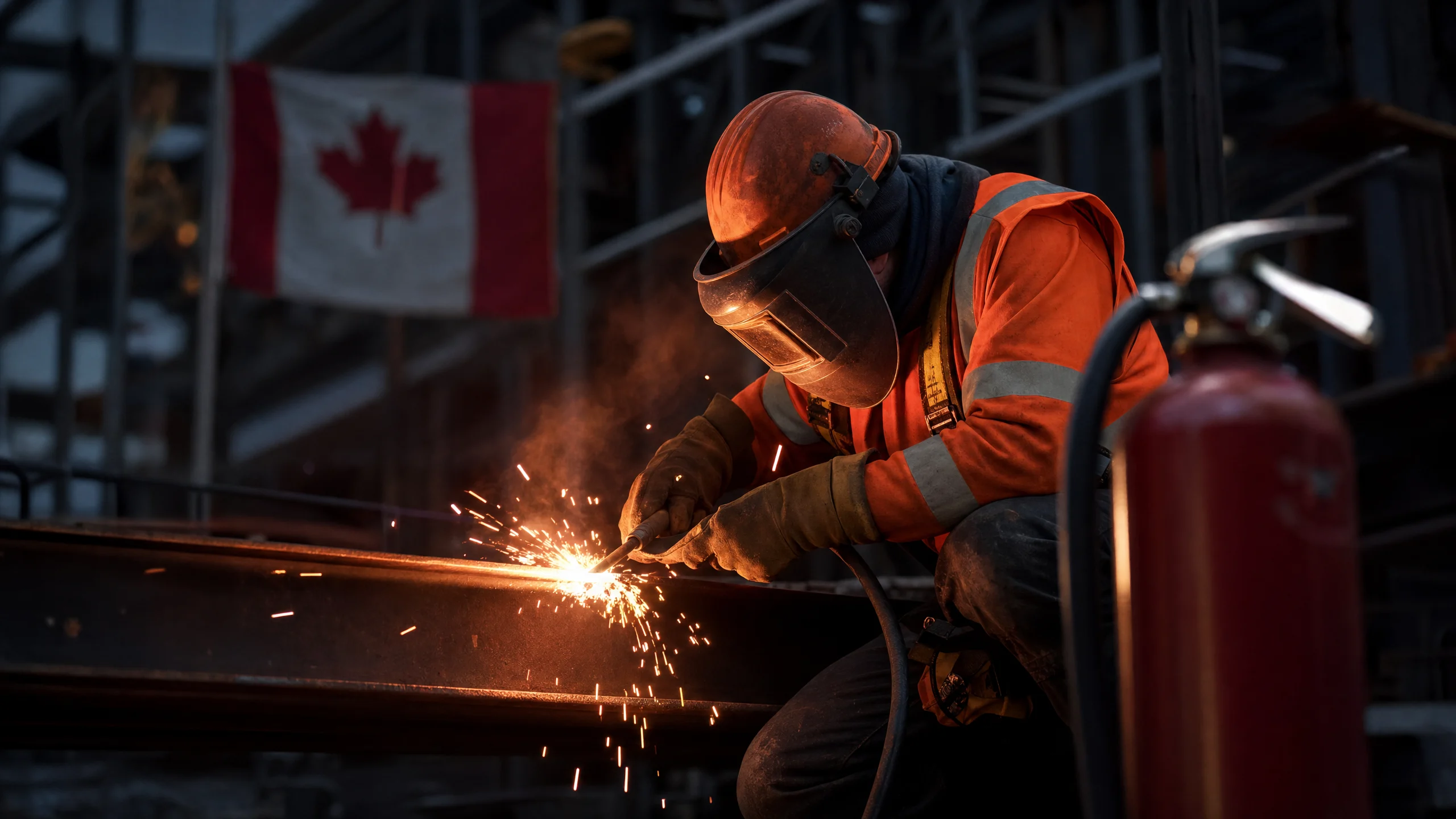
Construction sites are inherently vulnerable to fire. With temporary electrical wiring, exposed combustible materials, open flames from hot work, and the constant presence of flammable liquids, the risk of a catastrophic fire is a daily reality. Unlike completed buildings, construction sites lack the passive fire protection systems, sprinkler networks, and compartmentalization that slow the spread of flames. When a fire starts on a construction site, it spreads rapidly, threatening the lives of workers, destroying expensive equipment, and causing massive project delays.
For Canadian contractors, fire safety is not just a best practice; it is a strict legal requirement enforced by provincial occupational health and safety regulators. From the storage of propane cylinders to the execution of welding operations, every aspect of fire prevention is governed by detailed regulations. Failing to comply with these laws can result in severe penalties, stop-work orders, and criminal liability if a worker is injured or killed.
This guide breaks down the core legal requirements for fire safety on Canadian construction sites. We will explore the specific rules surrounding hot work permits, fire extinguisher placement, flammable material storage, and emergency response planning, drawing directly from provincial legislation such as Ontario Regulation 213/91 and the Alberta Occupational Health and Safety Code.
The reality of fire hazards in construction
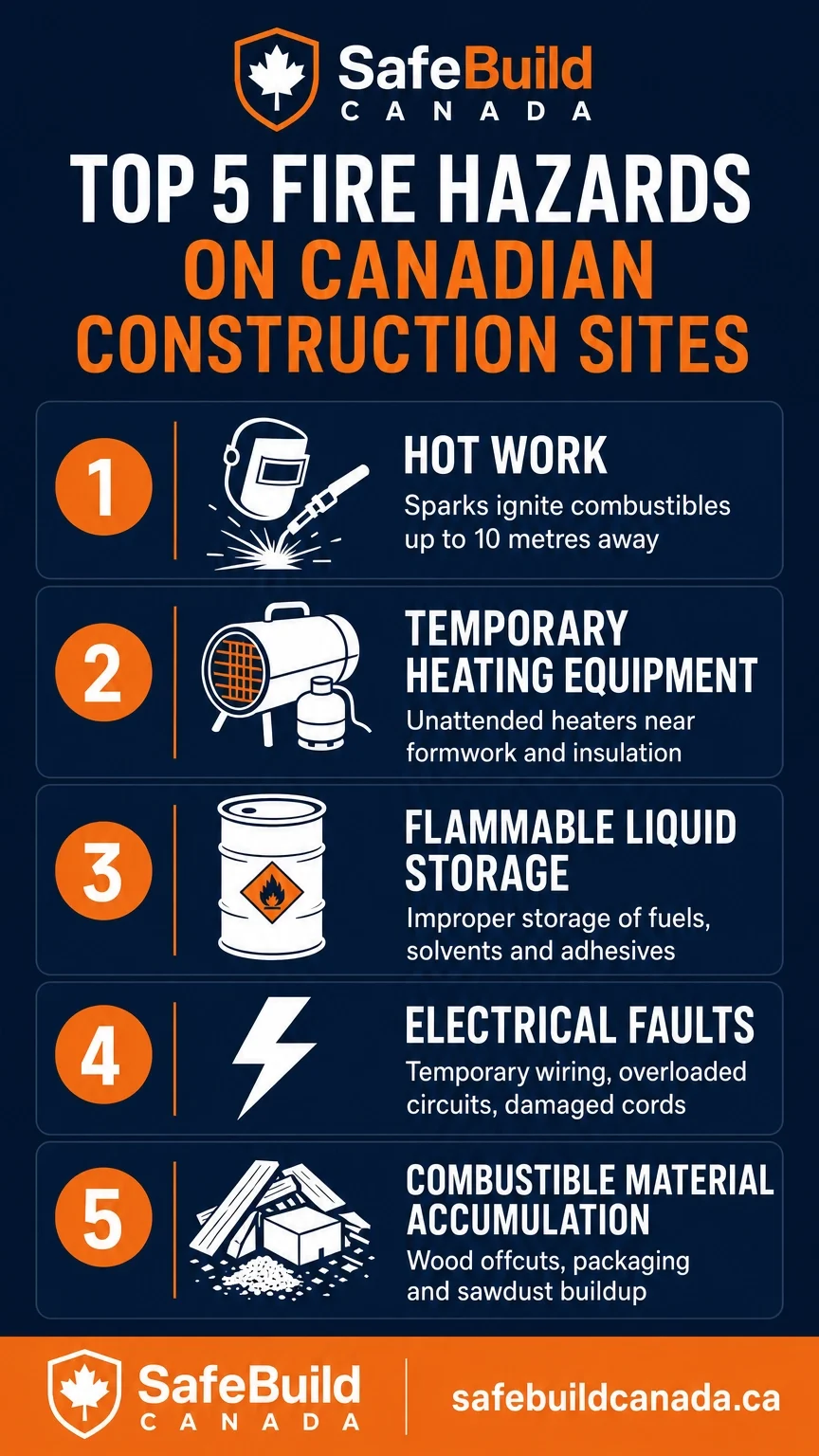
Before diving into the legal requirements, it is critical to understand why construction sites are so susceptible to fire. The combination of ignition sources and fuel is constantly shifting as the project progresses. A spark from a grinder can easily find its way into a pile of sawdust, or a temporary heater can ignite nearby formwork if left unattended.
According to data from fire protection associations, hot work is one of the leading causes of construction fires in North America. Welding, cutting, brazing, and grinding produce sparks and molten slag that can travel considerable distances, often lodging in hidden crevices where they smoulder for hours before erupting into flames. This is why the hazard identification and risk assessment process must specifically address fire risks at every stage of the build.
Other common ignition sources include temporary electrical installations, which can overload and short circuit, and temporary heating equipment used during the winter months. When these ignition sources are combined with the abundant fuel found on a typical site, such as lumber, insulation, packaging materials, and flammable solvents, the risk profile becomes severe.
Hot work permits and procedures
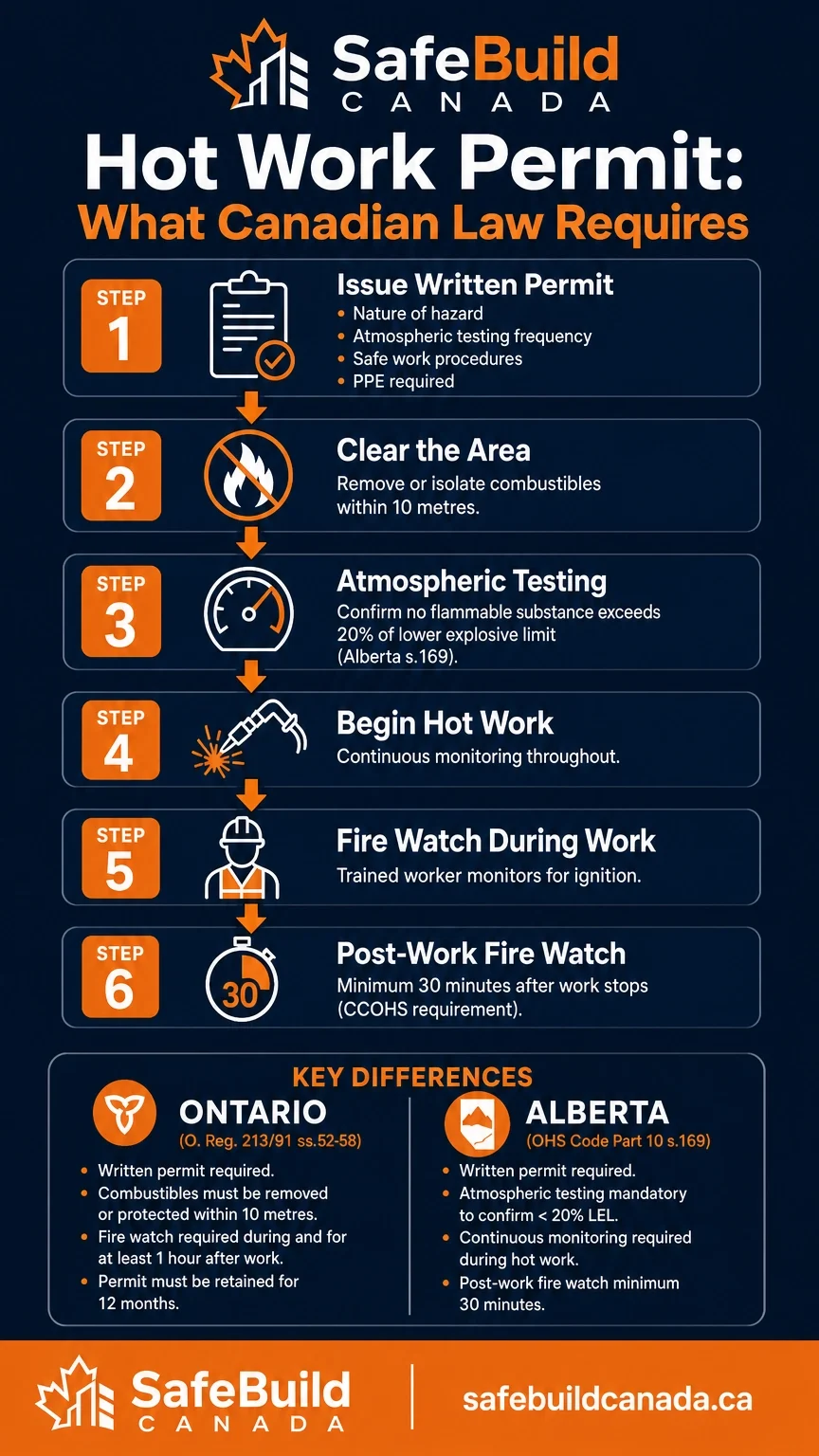
Hot work is arguably the most tightly regulated activity regarding fire safety on a construction site. Because the risk of ignition is so high, provincial regulators require strict controls, typically centered around a formal hot work permit system.
In Alberta, the Occupational Health and Safety Code Part 10 outlines specific requirements for hot work in hazardous locations. Section 169 mandates that an employer must issue a hot work permit before any hot work begins in an area where an explosive atmosphere may exist. This permit must detail the nature of the hazard, the type and frequency of atmospheric testing required, the safe work procedures to be followed, and the necessary personal protective equipment.
Furthermore, the Alberta code requires that the hot work location be cleared of combustible materials or suitably isolated from them. Crucially, atmospheric testing must confirm that the atmosphere does not contain a flammable substance exceeding 20 percent of its lower explosive limit. This testing must be repeated at regular intervals appropriate to the hazard.
Ontario Regulation 213/91 takes a similar approach, requiring that where welding or cutting is to be done, precautions must be taken to protect workers and the project from fire. This includes removing combustible materials from the vicinity or shielding them with non-combustible materials.
A critical component of any hot work procedure is the fire watch. The Canadian Centre for Occupational Health and Safety recommends that a trained worker be designated to monitor the area for fire during the hot work and for a minimum of 30 minutes after the work has stopped. This post-work fire watch is essential because sparks and slag can smoulder unnoticed for long periods before igniting a full-blown fire.
Fire extinguishing equipment requirements
Having the right fire extinguishing equipment readily available is a fundamental legal requirement across all Canadian jurisdictions. The laws dictate not only the presence of extinguishers but also their type, rating, placement, and maintenance schedule.
In Ontario, Section 52 of O. Reg. 213/91 states that fire extinguishing equipment shall be provided at readily accessible and adequately marked locations at a project. Section 53 specifies that every fire extinguisher must be a type whose contents are discharged under pressure and must have an Underwriters Laboratories of Canada rating of at least 4A40BC. This rating indicates the extinguisher's effectiveness against ordinary combustibles (Class A) and flammable liquids (Class B).
The placement of these extinguishers is also strictly regulated. They must be located near areas where flammable liquids are stored, where hot work is being performed, and near temporary heating equipment. Furthermore, Section 54 requires that fire extinguishing equipment be protected from physical damage and from freezing, which is a critical consideration during Canadian winters.
Maintenance and inspection are equally important. Ontario law requires that every fire extinguisher be inspected for defects or deterioration at least once a month by a competent worker. The date of this inspection must be recorded on a tag attached to the extinguisher. If an extinguisher is used, even partially, Section 55 mandates that it must be refilled or replaced immediately.
Contractors must integrate these inspection requirements into their regular OHS inspections to maintain compliance and confirm that equipment is ready to deploy in an emergency.
Storage and handling of flammable materials
Construction sites rely heavily on flammable and combustible liquids, including gasoline, diesel, solvents, adhesives, and paints. The improper storage and handling of these materials is a major fire hazard and a frequent target of regulatory enforcement.
Provincial regulations require that flammable liquids be stored in approved containers, typically those bearing a ULC or Factory Mutual certification. These containers are designed to vent pressure safely in the event of a fire, preventing a catastrophic explosion.
In Ontario, O. Reg. 213/91 dictates that flammable liquids or gases must be stored in a building or storage tank suitable for the purpose. There are strict separation distances required; for example, flammable storage must be kept at least 100 metres away from any magazine used for explosives.
When dispensing flammable liquids, contractors must implement bonding and grounding procedures to prevent the buildup of static electricity, which can generate a spark and ignite the vapours. This is particularly important when transferring fuels between containers or fueling equipment. The electrical safety protocols on site must account for these hazardous locations, confirming that only intrinsically safe or explosion-proof electrical equipment is used in areas where flammable vapours may be present.
Propane cylinders, commonly used for temporary heating, require special attention. They must be stored upright in a secure, well-ventilated area away from vehicular traffic and ignition sources. Empty cylinders must be treated with the same caution as full ones, as they still contain residual gas and explosive vapours.
Housekeeping and combustible material control
Good housekeeping is the most basic, yet often the most overlooked, aspect of fire prevention. The accumulation of combustible debris provides the fuel necessary for a small spark to grow into a large fire.
Provincial regulations universally require contractors to maintain a clean and orderly work site. This means regularly removing wood offcuts, sawdust, packaging materials, and other combustible waste from the work area. Debris should not be allowed to accumulate near ignition sources, electrical panels, or temporary heaters.
Particular attention must be paid to the storage of oily rags or materials soaked in flammable solvents. These materials are susceptible to spontaneous combustion as the oils oxidize and generate heat. They must be disposed of in approved, self-closing metal containers designed specifically for this purpose.
Maintaining clear access routes is also a critical component of housekeeping. Aisles, stairways, and exits must be kept free of obstructions to allow workers to evacuate quickly in the event of a fire and to allow emergency responders to access the site. This requirement ties directly into the site's overall construction site emergency response plan.
Emergency response and worker training
Having the right equipment and procedures in place is only half the battle; workers must be trained to respond effectively if a fire breaks out. Every construction project must have a site-specific emergency response plan that details the actions to be taken in the event of a fire.
This plan must include evacuation routes, designated muster points, and procedures for accounting for all workers on site. It must also establish a clear protocol for notifying the local fire department. Workers must be trained on this plan during their site orientation and through regular toolbox talks.
Training must also cover the proper use of fire extinguishers. Workers need to understand the different classes of fires and which type of extinguisher is appropriate for each. They must be taught the PASS method (Pull the pin, Aim at the base of the fire, Squeeze the handle, Sweep from side to side) and, crucially, they must understand when a fire is too large to fight and when evacuation is the only safe option.
For workers involved in high-risk activities, such as hot work or handling flammable liquids, specialized training is required. They must understand the specific hazards associated with their tasks and the control measures required by law. This includes understanding the requirements of the lockout tagout procedures when working on equipment that could present a fire hazard if accidentally energized.
Building a culture of fire prevention
Compliance with fire safety regulations requires a deliberate approach from site management. It cannot be treated as an afterthought or a box-checking exercise. Contractors must integrate fire prevention into every stage of the project, from the initial site layout to the daily coordination of trades.
This means establishing clear policies for hot work, enforcing strict housekeeping standards, and confirming that all fire extinguishing equipment is properly maintained. It also means fostering a culture where workers feel empowered to report fire hazards and where supervisors take immediate action to correct them.
By understanding and applying the legal requirements outlined in provincial occupational health and safety legislation, Canadian contractors can materially reduce the risk of fire on their sites. This protects the lives of their workers, safeguards the project schedule, and keeps the company compliant with the law. Fire safety is a shared responsibility, and it begins with a thorough understanding of the rules that govern the modern construction site. For a broader overview of your legal obligations on site, the construction site safety guide is an essential starting point.